




Stool is the box
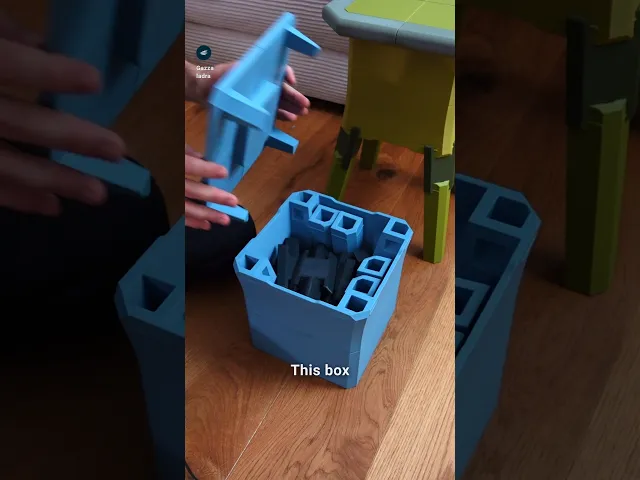
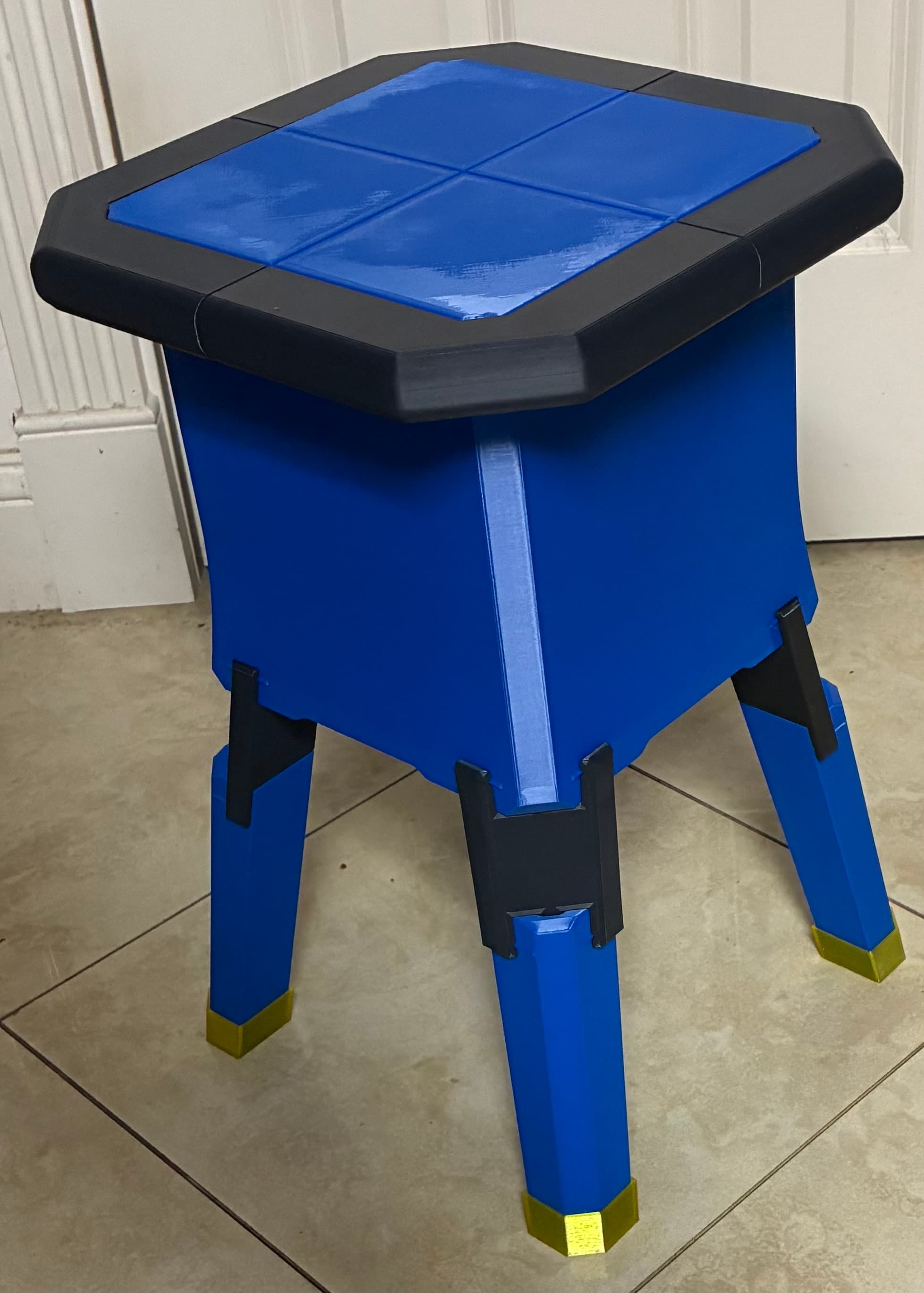
A full-sized robust stool that can be disassembled into a small box so you can store it in a cabinet. For unexpected additional guest. Normal folding chairs always fold into a slightly less inconvenient and ugly shape. This design even fits small cabinets or can sit out in the open as pretty little box.
Size assembled: 300 x 300 x 450 mm Size disassembled: 218 x 218 x 210 mm The design can be printed on a 220 x 220 print bed!
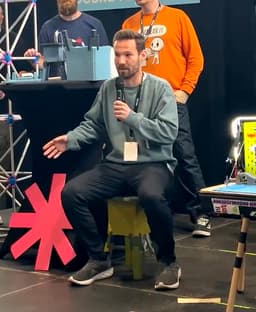
After bringing this to the Prague maker fair with Prusa both the PLA and PETG prints survived a full week of testing with no issues at all. The heaviest person to sit on it had 160 KG to his name. Even the small 50% prototype can hold my body weight of 80 KG, as seen in the pictures.
Options The central box is provided in two versions. One big print and a separated one with small connectors to be glued together. If you don’t like big prints overnight the second option is more convenient. I included files for TPU feet, they are optional, you can also use little store bought felt pads to protect your floor.
Instructions Print all parts, according to the info below and your preference Check the images for visual comprehension of how the parts go inside of the box. You cannot just throw them in randomly.
Boxing
- First place the 4 seat parts
- Add the 4 lower legs besides them
- Add one of the upper legs in the left-over spot
- Add the other three upper legs on top
- Add the Lid
Unboxing
- Plug in the 4 upper legs
- Plug in the 4 lower legs
- Place the box lid on the ground and add the 4 seat parts
- Take the central assembly, rotate it and place it on the seat assembly Done!
Print settings Required build volume: 220 x 220 x 200 mm Material usage: 2-3 KG
Material: This design can be printed in default settings and normal PLA, it will work! However, if you want it to be really strong and durable I suggest using PETG and the stronger settings below.
Print direction: files are rotated correctly Support: none Nozzle size: 0,4 mm Line width: 0,4 mm Layer height 0,2 mm Wall count: 3 for all parts besides the upper leg that is stronger with 5 Infill: 20% - preferably cubic - for all parts besides the upper leg that is stronger with 30% Build plate adhesion type: A Brim is advised, especially for the bigger parts
Warping: If you choose to use PETG the bigger parts are prone to warping. Therefore, they have anti-warping cuts at the bottom and big flat surfaces. I also recommend printing the parts enclosed and generically paying attention to all settings that influence warping. If you print in PLA, that’s not a big concern, other than maybe adding a Brim.
Stool is the box
Modular Shelf
Infinite Notebook

Clock(lamp)

Frank the frog pen holder

Multifunctional Planter “BRBP”

Sponge holder

Tea bag dispenser

Marshmallow table

Raily – modular wall organization

Mushroom lamp “Amanita Muscaria”

Glasses case

Laundry detergent dispenser

Mushroom coat hook / hanger

Cannon spotlight lamp

Planter “Extra”

Bird feeder | suet ball holder

Cheese shelf bracket

Paper towel holder

BOXY Planters
